


Best Winter Pet Beds: What to Look for and Where to Buy

Updated: Oct 21
Best Winter Pet Beds: What to Look for and Where to Buy
When temperatures drop, your dog or cat feels it just as much as you do. While most pets regulate their body temperature reasonably well, cold floors, drafty rooms, and chilly nights can leave them uncomfortable, restless, and less healthy over time. That is where a good winter pet bed makes a real difference.
This guide covers everything you need to know before buying a winter pet bed: the features that actually matter, the types available, and what separates a bed that lasts through the season from one that looks good in a product photo and not much else.
Why Cold-Weather Pet Beds Matter
Standard pet beds are designed for year-round use. They provide cushioning and a defined sleeping space, but they are not built to retain heat or block cold drafts. In winter, those limitations show up fast.
Dogs and cats that sleep on cold surfaces or in drafty corners are more likely to experience joint stiffness, interrupted sleep, and reduced energy. Older pets and small breeds are especially vulnerable, since they lose body heat faster and have less muscle mass to compensate.
A winter-specific bed addresses this with thicker insulation, raised edges that trap warmth, and materials that hold heat without overheating the animal. Done right, the pet chooses it over any other spot in the house.
Key Features to Look for in a Winter Pet Bed
Insulation and Fill Material
The fill is the most important factor for warmth. Look for high-loft polyester fill or memory foam with a thermal cover. Thin fill compresses quickly and loses its insulating effect within weeks. Beds advertised as thickened or high-density fill tend to hold their shape and their warmth far longer.
Enclosed or Semi-Enclosed Design
Open flat beds allow heat to escape on all sides. Enclosed and semi-enclosed designs — beds with raised walls, hoods, or a cave-like shape — keep warmth concentrated around the animal. Semi-enclosed designs are often the best compromise: they offer the warmth of an enclosed space while giving pets an easy way in and out.
Non-Slip Bottom
A bed that slides on hardwood or tile is a safety hazard and will simply be avoided by your pet. A non-slip bottom keeps the bed in place even when a dog spins around to settle in.
Machine-Washable Cover
Winter pet beds see more use than summer ones, and a bed that cannot be washed becomes a hygiene problem within weeks. Removable, machine-washable covers are not optional in a cold-weather bed — they are a basic requirement.
Size and Weight Capacity
A bed that is too small forces the pet to curl up tightly, which defeats the purpose of the insulation. Measure your pet from nose to tail while they are curled in their natural sleeping position, then add a few inches on each side. When in doubt, size up.
Types of Winter Pet Beds
Bolster Beds
These have raised walls on three or four sides that act as windbreaks and allow the pet to lean against something warm. The walls also help anxious dogs feel secure. Great for dogs that sleep curled up.
Cave or Hooded Beds
Fully enclosed beds with a hood or flap opening. Cats and small dogs gravitate toward these because they replicate the feeling of a burrow. Very effective at retaining heat, but not ideal for large dogs or pets that overheat easily.
Semi-Enclosed Beds
A middle ground between a bolster and a cave bed. Three high walls and a lower entry side. The pet can see out and get in easily, while the walls block drafts and trap body heat. Works well for both cats and dogs across a range of sizes.

Heated Beds
Electric heated beds are an option for very old pets or animals recovering from surgery, but they require a power source, supervision, and careful temperature management. For most healthy pets, a well-insulated non-heated bed is safer and more practical.
What We Recommend
One option worth looking at is the Winter Thickened Semi-Enclosed Pet Bed from StoreMG. It is a cloth pet bed with thickened padding and a semi-enclosed shape, designed to give cats and small dogs a warm, snug space to rest. The listing describes it as durable and easy to clean.
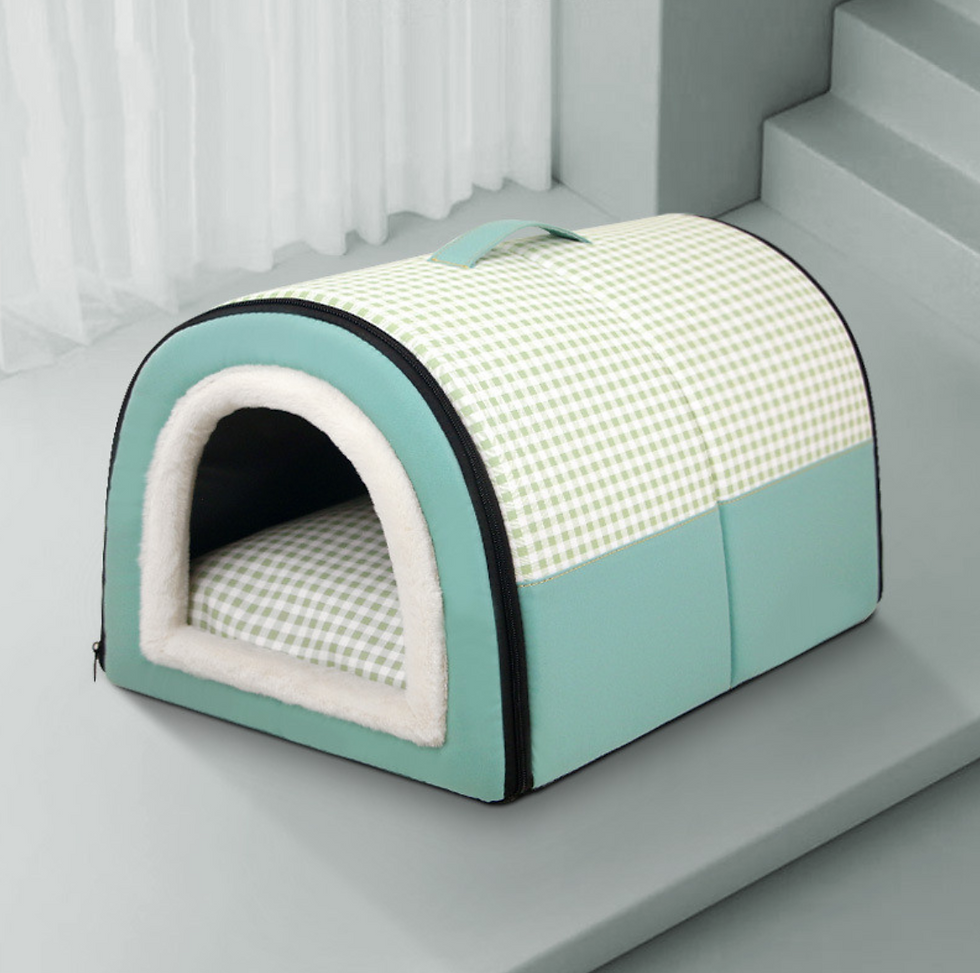
It comes in four sizes — S (35 × 27 × 25 cm), M (45 × 32 × 35 cm), L (60 × 43 × 40 cm) and XL (70 × 55 × 45 cm) — in a choice of elegant gray, green or light yellow. At $39.99 with free U.S. shipping, it sits at a practical price point for a dedicated cold-weather bed.
Check sizing and color options on the product page.
How to Get Your Pet to Use Their New Bed
Pets are creatures of habit. A new bed placed in the middle of a room is likely to be ignored for the first few days. Here is how to speed things up.
Place the bed in a spot your pet already gravitates toward — near a wall, in a quiet corner, or their current sleeping area.
Put a worn t-shirt or a blanket that smells like you inside the bed. Familiar scents make it feel safe.
Avoid forcing or placing the pet on the bed. Let them discover it on their own.
If the bed has a hood, leave it folded back for the first week. Once the pet is comfortable sleeping in it, fold the hood over gradually.
Caring for a Winter Pet Bed
A bed that is not maintained stops doing its job. Follow these steps to extend its life and keep your pet healthy.
Wash the cover every two to three weeks, or immediately after any accident.
Shake out the fill section monthly to restore loft. Compressed fill loses its insulating properties.
Inspect seams for wear, especially if you have a dog that likes to dig before lying down. A small tear can become a large one quickly.
Frequently Asked Questions
Do dogs really need a special bed in winter?
Not every dog does, but many benefit from one. Breeds with short coats, small body size, or older dogs with joint problems feel the cold more acutely. If your dog shivers at night, sleeps restlessly, or avoids their current bed in cold weather, upgrading to an insulated winter bed is a practical fix.
What is a semi-enclosed pet bed and what are the benefits?
A semi-enclosed bed has raised walls on three sides and a lower opening on the fourth. This design blocks cold drafts, traps body heat, and gives the pet a sense of security without completely enclosing them. It is easier for older or less agile pets to enter and exit compared to a cave-style bed.
Can cats and dogs share the same type of bed?
They can share the same type, but not usually the same bed. Cats prefer enclosed or semi-enclosed beds that feel like a burrow. Dogs vary by size and sleeping style. A semi-enclosed bed sized appropriately works for both species, but pets generally sleep better when they each have their own space.
How do I wash a pet bed without ruining the stuffing?
Remove the cover and wash it separately on a gentle cycle with cold or warm water. For the fill section, check the care label. Most can be spot-cleaned or washed in a large-capacity front-loader on a delicate cycle. Tumble dry on low with a couple of dryer balls to restore loft. Avoid high heat, which can damage synthetic fill permanently.
Is a semi-enclosed bed good for anxious dogs?
Yes. The enclosed walls provide a sense of den-like security that many anxious dogs respond well to. Pair the bed with a worn item of your clothing inside it and place it in a low-traffic area of the house. Most anxious dogs adopt a semi-enclosed bed faster than an open flat bed.
A good winter pet bed pays for itself in better sleep, fewer vet visits for cold-related joint issues, and a pet that is visibly more comfortable and settled during the coldest months. The key is matching the bed type to your pet's size, sleeping style, and personality — and then placing it somewhere they already want to be.
Looking for more ways to keep your pet comfortable? Browse beds, feeders and everyday care items in Pet Supplies.


Comments